
There is a specific kind of regret that arrives about forty minutes into a Lagos afternoon, somewhere between the car and the venue, when you realise the outfit that looked composed at 10am has decided to become a problem.
The usual conclusion is that you wore too much. Usually you did not. You wore the wrong thing, which is a different failure with a different fix.
Why you overheat
Your body cools itself by evaporating sweat off your skin. Anything that interferes with evaporation makes you hotter, regardless of how little of it you are wearing.
This is why a fitted polyester dress with very little fabric can be far more punishing than loose cotton trousers and a long-sleeved shirt. The polyester traps a film of moisture against your skin and stops the process working. The cotton lets air move, pulls moisture away from the body and releases it.
Two factors matter more than coverage: what the fibre does with moisture, and whether air can move between the fabric and your skin. Get those right and you can be far more dressed than you expected.
The fabrics that work
- Cotton, especially loosely woven. Absorbs moisture, breathes, washes easily. The reliable default.
- Linen. The best of them. Wrinkles immediately and you should make peace with that; the creasing is the cost of the airflow.
- Silk. Underrated in heat. Real silk is a protein fibre that moves moisture well and feels cool against skin. It stains with sweat, so it suits evenings and air-conditioned days more than a long outdoor afternoon.
- Fine mesh. Almost entirely holes, which is the point. Air moves through it constantly. The layer underneath becomes the thing that matters.
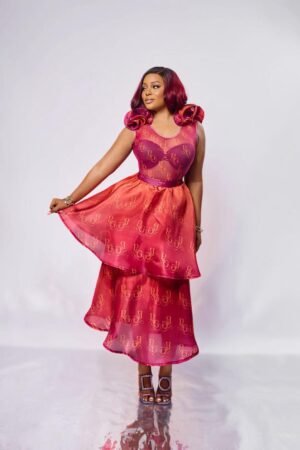
- Organza. Crisp and structured, and it holds itself away from the body rather than clinging. That standing-off is what keeps it comfortable.
- Adire crepe and other light crepes. Textured surface means less fabric in full contact with skin.
The fabrics that betray you
- Heavy polyester and most satin. Hydrophobic, so moisture sits on your skin instead of leaving.
- Anything fully lined in synthetic. The outer fabric can be perfect and the lining still ruins it. Always check.
- Thick sequins and heavy beading on a solid base. Effectively a second, non-breathing skin.
- Stretch denim in high percentages. The elastane is the problem, not the cotton.
The lining point deserves emphasis because it is the one people miss. An unlined garment in a good fabric will outperform a lined garment in the same fabric every time. It is worth asking about before you buy.
Silhouette does more than you think
After fibre, shape is the biggest lever, and it is free.
You want fabric to touch you in a few places and float everywhere else. That is why a wide-leg trouser is cooler than a fitted one in identical cloth, and why a loose shirt beats a fitted tee. Air needs somewhere to move.
Three shapes that reliably work:
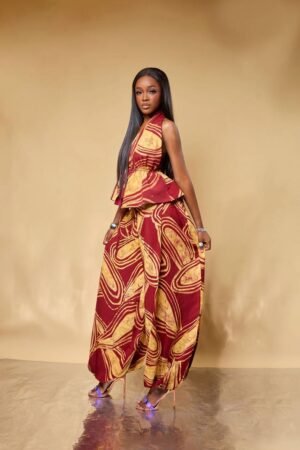
- Fitted on top, full below. A close top with wide-leg trousers or a full skirt. Defined at the waist, open everywhere it matters.
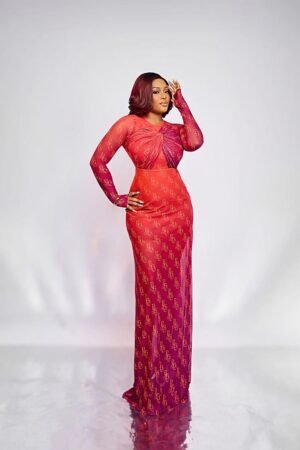
- Column. A straight floor-length dress that skims. Long does not mean hot when nothing is gripping you.
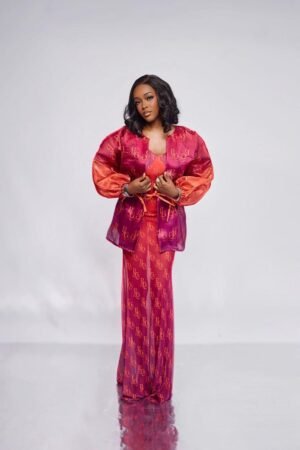
- Open layer. A light unlined jacket worn open over something simple. It adds the polish of a third piece without the heat of a closed one.
That third one is the trick for over-air-conditioned venues, which is the other half of the Lagos problem. You are not dressing for one temperature. You are dressing for a hot car park and a cold hall, twenty metres apart.
The daytime event problem
A wedding that starts at noon is the hardest brief there is. You are outdoors, in strong light, for hours, and you are expected to look like you made an effort.
What works:
- Length over coverage. A floor-length unlined dress in a breathable fabric is cooler than a short fitted one, and dressier. Fabric that skims also shades your legs.
- Sleeves, genuinely. A loose long sleeve in light cloth keeps direct sun off your arms. This is why it has been standard hot-climate dress for centuries.
- Pale or mid tones for full sun. Deep colours absorb more heat. Save the black for evening.
- Consider the photographs. Strong overhead sun is unforgiving on anything sheer. Wear the more structured layer underneath.
- Shoes you can stand in. Heat makes feet swell. A heel that fits at 11am will not fit at 4pm. A block heel or a good flat is not a compromise.
A working hot-weather capsule
If you were building from nothing, six pieces will carry you through most of a Lagos year:
- Wide-leg trousers in silk or a light crepe
- A plain, well-cut white shirt
- One floor-length unlined dress
- A fine mesh top, for layering over almost anything
- An unlined organza or cotton jacket to wear open
- One hand-dyed piece with enough personality to be the whole outfit
That is roughly fifteen outfits, none of which will punish you at two in the afternoon.
Humidity is the part nobody accounts for
Temperature gets the blame, but humidity is what actually decides how bad an afternoon becomes.
Your cooling system depends on sweat evaporating. When the air is already close to saturated, as it is through most of the Lagos rainy season, evaporation slows dramatically. The sweat stays on you. This is why 30 degrees in Lagos can feel considerably worse than 35 degrees somewhere dry, and it is why the advice that works in dry heat does not transfer directly.
In humid heat, two things become more important than they would otherwise be:
- Airflow beats fabric weight. Moving air is what drives evaporation when the humidity will not. This is the argument for loose shapes and open weaves over simply choosing the thinnest fabric you own.
- Absorbency cuts both ways. Cotton pulls moisture off your skin, which is good, but in high humidity it then struggles to release it and can stay damp. Linen, with its stiffer fibre and looser weave, holds itself off the skin and dries faster. It is the better choice on the worst days.
Sweat, fabric and the things that stain
Nobody wants to discuss this and everybody needs to.
- Aluminium in antiperspirant reacts with sweat and fabric to create the yellow stiffening you see in the underarms of white shirts. It is the combination, not sweat alone. Let antiperspirant dry fully before dressing, and rinse the underarm area of a garment before it goes in the wash rather than after it has sat in a laundry basket for three days.
- Silk is the most vulnerable. Salt from sweat weakens the fibre over time and leaves rings that are very hard to remove. If you wear silk in real heat, wear it for shorter events, air it immediately afterwards, and do not leave it folded while damp.
- Mid-tones hide the most. Solid pale colours and solid black both show damp patches clearly. Prints, mid-tones and textured weaves hide it. This is a real, practical reason to choose a patterned piece for a long outdoor day.
- Loose beats tight for marks as well as comfort. Fabric that is not pressed to your skin does not show what your skin is doing.
A worked plan: noon to midnight
The hardest brief is the event that starts in full sun and ends in an air-conditioned hall eight hours later. You cannot dress for both at once, so dress for the hard part and carry the fix.
- Base layer: floor-length or wide-leg, unlined, in a mid-tone print. Breathable, forgiving, covered enough for sun.
- Carry a light layer, do not wear it. An unlined jacket in a bag weighs almost nothing and solves the reception air conditioning entirely. Wearing it from the start means sweating in it for five hours first.
- Shoes sized for later. Feet swell in heat, sometimes by close to half a size. Choose the shoe that is very slightly roomy at noon.
- Hair off the neck for the outdoor portion. More of your heat leaves through your head and neck than you think.
- Refresh, do not reapply. A small cloth and a change of underlayer in the car does more than more perfume over the top of a long day.
The other season
Harmattan reverses the problem, and the wardrobe should shift with it. Air that dry pulls moisture out of skin and out of fabric. Static becomes a genuine nuisance with synthetics and with fine mesh, and silk and wool feel much better than they do in August. Dust is the other factor: pale cloth and open weaves need washing more often, and that is the season to be most careful with hand-dyed pieces, since more washing means more colour loss.
A wardrobe built for humid heat mostly still works. What changes is that closed shoes, a real layer and deeper colours come back, and the unlined silk you avoided in July becomes the best thing you own.
Almost everything we make is cut unlined for exactly this reason, in silk, organza, mesh and adire crepe. You can see the full range in the shop, and every product page lists the fabric and whether the piece is lined, because in this climate that is not a detail.